
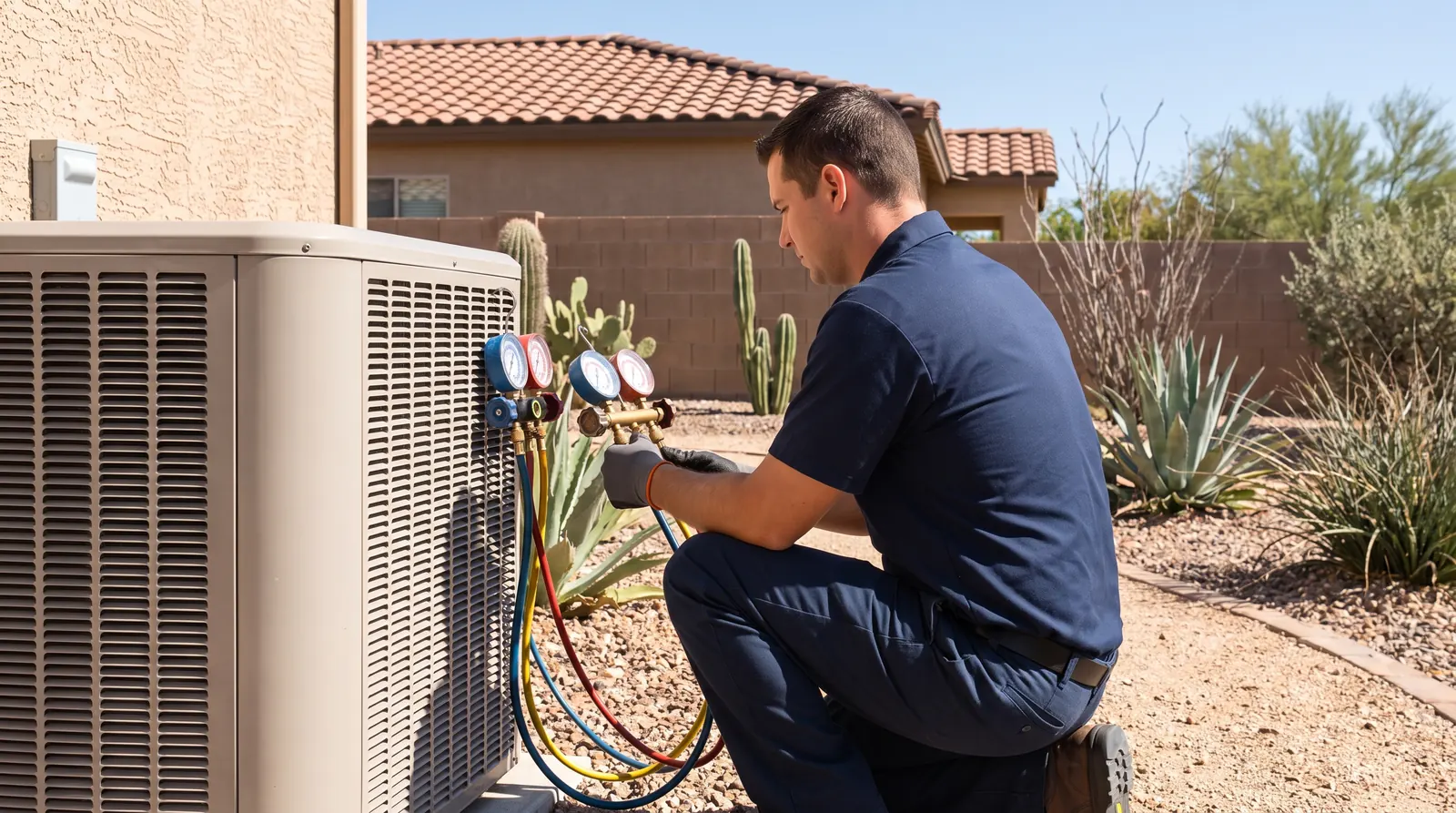
Learn what a whole-home comfort assessment may cover and how it helps Phoenix Valley homeowners organize questions about rooms, insulation, ducts, and attic conditions.
A whole-home comfort assessment is a structured look at how a home is put together and how it is being used. It is different from focusing on only one symptom, such as a hot bedroom or a loud register. The purpose is to collect information about the home as a connected system, then use that information to identify sensible questions and priorities. For Phoenix Valley homeowners, that often means paying close attention to the attic, the roofline, sunlight, air paths, insulation, ducts, and the way living spaces are occupied.
The conversation comes first
An assessment often begins with the homeowner’s experience. You may be asked which rooms feel different, when those differences occur, what changes you have already noticed, and whether recent remodeling or equipment work has taken place. Share practical details: rooms that are rarely used, doors typically kept closed, rooms with direct afternoon sun, and any visible signs of dust, loose insulation, or disconnected materials.
It can help to have a short list of concerns ready. Include the location of the thermostat, the age or service history of major equipment if known, and any past work in the attic or on the roof. The assessor is not asking for a perfect history. Even partial information can help establish where a closer look may be useful.
A visual walkthrough of the living space
The indoor portion may include a walkthrough of rooms, hallways, ceilings, registers, return grilles, windows, exterior doors, and obvious penetrations. The assessor may look for patterns rather than a single visible defect. For example, a room that is different from adjacent rooms may lead to questions about its orientation, ceiling boundary, supply and return paths, or nearby attic area.
A walkthrough also creates an opportunity for homeowners to point out changes that are hard to capture in a work order. You might demonstrate a door that tends to stay shut, identify a room that gets late-day sun, or show a register hidden behind furnishings. These details help connect the physical layout to everyday use.
Looking at the attic and accessible systems
Where access and conditions allow, an attic review may examine insulation coverage, areas where insulation appears disturbed, attic access points, visible gaps at ceiling penetrations, duct runs, duct insulation, and accessible duct connections. The review may also consider visible ventilation components and signs that merit further attention. Attic work should be approached carefully because of heat, tight clearances, wiring, and the risk of stepping on unsupported ceiling areas.
The scope depends on what is accessible and appropriate to inspect. A visual assessment is not the same as opening every wall, moving every stored item, or diagnosing equipment that requires a specialized HVAC service visit. If another trade is needed, the assessment can help frame the question for that professional.
Testing and documentation
Some assessments include noninvasive tools or measurements, while others are primarily visual. The methods used should be explained in advance, along with their limits. A useful assessment documents observations, notes uncertainty, and distinguishes between what was seen and what may need additional evaluation. Good documentation helps avoid turning a hunch into a conclusion.
What you should receive afterward
Ask for a clear summary of the conditions observed, the questions they raise, and any recommended next steps. The most helpful recommendations explain why an item is being considered and how it relates to the homeowner’s stated concerns. They should also make room for sequencing: some items may be worth addressing before others, and some may simply warrant monitoring or discussion with another qualified professional.
A whole-home comfort assessment does not promise a particular outcome. Its value is in creating a more complete picture, so decisions about insulation, air sealing, ducts, ventilation, or HVAC-related follow-up can be made with context.